
Year: 2079
Location: Earth’s Orbital Gateway Terminal, Low Earth Orbit
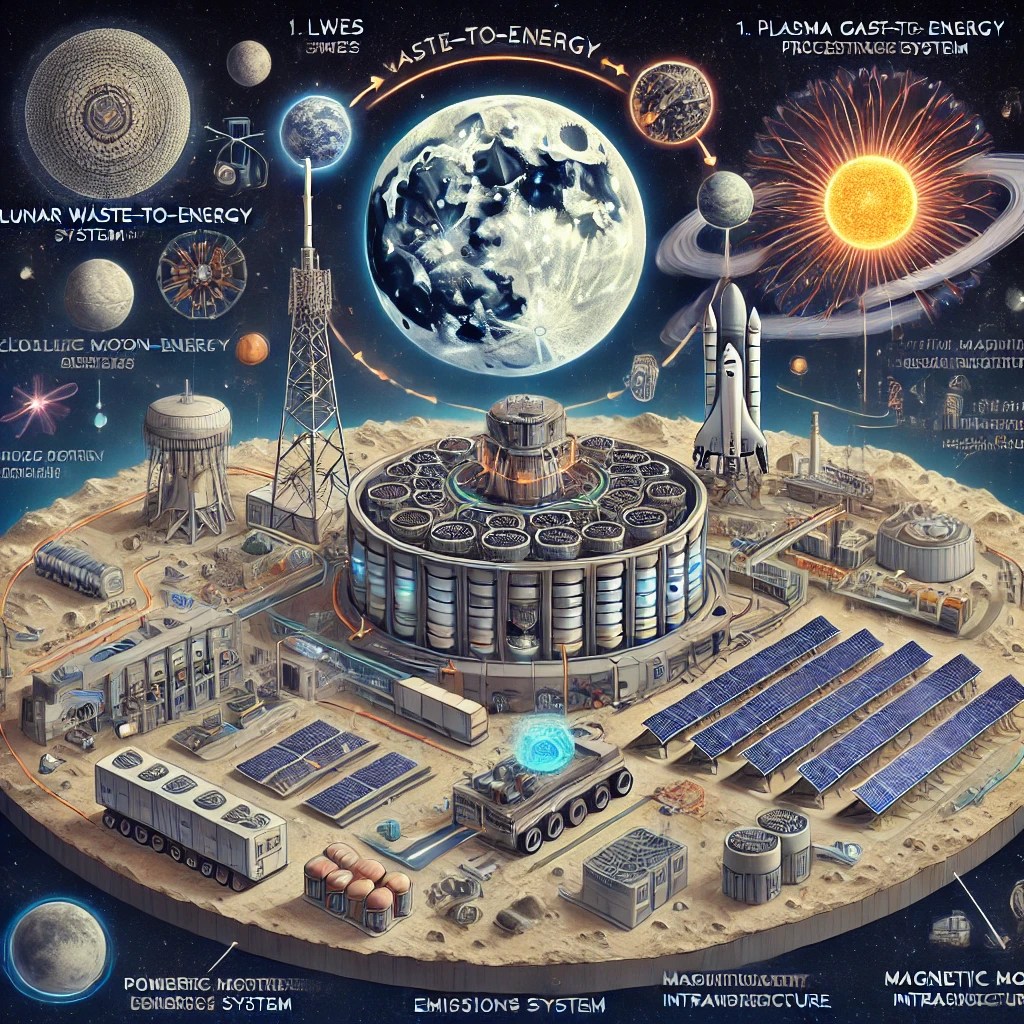
“Ladies and gentlemen, welcome aboard the Eos Ascendant, the first passenger vessel bound for New Selene, humanity’s first self-sustaining lunar colony. I am Captain Elias Markov, and I’ll be your guide on this historic voyage. For many of you, this will be your first time experiencing interplanetary travel, and even for those who have been to Mars or Europa, this will be something unique. Today, we embark on a journey to a world that, only decades ago, was barren, lifeless, and riddled with impossible challenges. Now, thanks to the advent of the Lunar Waste-to-Energy System (LWES) and the Magnetic Moon Infrastructure (MMI), New Selene is a thriving metropolis, a beacon of human ingenuity and a stepping stone to the stars.
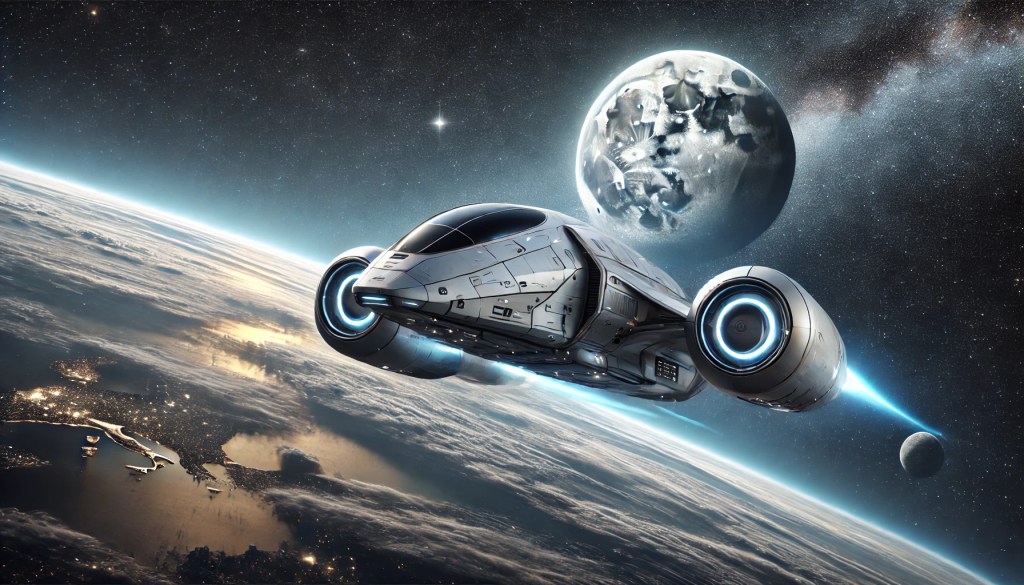
“We are currently preparing for our descent from Earth’s orbital gateway, an international space station that has served as a hub for lunar and deep-space flights since the mid-2060s. You may notice the gradual shift in gravity as we transition from microgravity to the artificial gravity field generated by the ship’s ion propulsion stabilizers—one of many breakthroughs derived from our research on the Moon. This very technology—utilizing ion manipulation and radiation repulsors—was first tested in the construction of the MMI, a system that now provides the Moon with its own electromagnetic shield and gravity-like force, making long-term human habitation possible.
Arrival at New Selene
“As we approach the Moon, you’ll see something remarkable—unlike the barren gray wasteland captured in old Apollo-era photographs, the Moon is now teeming with human activity. The orbital energy harvesters glisten in the sunlight, absorbing and redirecting solar radiation toward the colony’s artificial magnetic field generators. These stations power not only the electromagnetic gravity field but also provide direct energy conversion to the city below.
“Beneath us, the vast silver-and-glass domes of New Selene stretch across the surface. This is a marvel of 21st-century engineering—a fully self-sufficient lunar megacity, shielded from cosmic radiation and micrometeoroids, yet connected to the vast energy grid that keeps everything operational.
The Magnetic Moon Infrastructure (MMI) & Artificial Gravity
“Some of you may be wondering, ‘How do people live here without floating around in low gravity?’ The answer lies in the MMI, an array of powerful ion-field generators installed beneath the lunar surface. These create a simulated gravity effect using controlled electromagnetic repulsion, ensuring that lunar inhabitants experience an Earth-like gravitational pull.
“This breakthrough came after decades of research into how electromagnetic fields interact with quantum energy fluctuations. Instead of using impractical rotating space habitats, we engineered a way to anchor people to the Moon using an artificial magnetosphere. This also serves to protect residents from harmful radiation, eliminating one of the greatest barriers to lunar colonization.
“Now, thanks to this technology, New Selene has fully functional streets, parks, high-rise buildings, and even subterranean aquifers that supply fresh water. You will feel right at home.”
The Lunar Waste-to-Energy System (LWES) & Its Role in Sustainability
“As we descend toward the colony, you’ll notice something truly fascinating—plumes of energy rising from the Moon’s core. This is not volcanic activity; rather, it is the result of the Lunar Waste-to-Energy System at work.
“Decades ago, before we mastered self-sustaining colonies, waste disposal was one of the largest logistical problems in space. Transporting waste back to Earth was inefficient, and leaving it in space was unsustainable. That’s when scientists developed the LWES, a revolutionary waste incineration and energy conversion system.
“The idea was simple: burn all waste, extract usable energy, and recycle byproducts into new resources. The main challenge? The Moon lacks an atmosphere to support combustion. To solve this, engineers devised an enclosed oxygenation system that allows plasma-based incineration to occur at extreme temperatures. This burns waste into its most fundamental atomic components, which are then siphoned into different use cases.
“Byproducts like carbon, hydrogen, and metallic elements are reprocessed into building materials, oxygen supplies, and energy storage units. Excess energy feeds directly into the gravity field stabilizers, helping sustain the MMI. In essence, New Selene’s entire power grid runs off of a ‘closed-loop’ system where nothing goes to waste—not even the emissions from the process itself, which are redirected to power synthetic atmosphere processors for further use.
“This is the ultimate circular economy, a system where every discarded object contributes to the continued operation of the colony. It’s what allows New Selene to remain fully self-sufficient, without needing constant resource shipments from Earth.”
Living in New Selene
“As we make our final descent, you’ll see the main districts of New Selene. The colony has been divided into specialized zones to optimize efficiency and comfort for its 200,000 residents.
- The Lunar Core Hub: This is the heart of New Selene, home to the waste-to-energy reactors, central control stations, and power distribution centers.
- The BioDome Sector: A vast expanse of agricultural domes, where genetically modified plants thrive in simulated Earth-like conditions. These crops not only provide food but also contribute to oxygen generation through bioremediation.
- The Residential Arcologies: High-rise pressurized towers where people live, each with Earth-standard gravity, temperature, and atmosphere, thanks to the MMI system.
- The Industrial Zone: Manufacturing plants that produce new spacecraft, lunar vehicles, and advanced materials for continued expansion.
- The Tourist & Research District: A growing sector that welcomes visitors like yourselves, with luxury accommodations, observatories, and the first lunar spaceport for deep-space missions.
The Future of the Moon & Its Impact on Earth
“New Selene isn’t just a lunar colony—it is a proving ground for humanity’s expansion beyond Earth. The technology developed here has transformed life back home in unimaginable ways.
“Earth’s own waste-to-energy initiatives now mirror the lunar model, reducing landfill waste and revolutionizing sustainable energy practices. The research conducted on lunar gravity manipulation has led to advancements in medical science, particularly in treating bone density loss, muscle atrophy, and aging-related diseases.
“Furthermore, the Moon’s position as a resource hub has changed global economics. Lunar helium-3 mining has fueled the rise of clean fusion energy, significantly reducing Earth’s reliance on fossil fuels. And with New Selene acting as a gateway, future colonies on Mars and Europa are now within reach.”
Final Descent & The Beginning of Your Journey
“As we touch down at Selene Spaceport One, you are witnessing history in the making. What was once a barren rock has become a living, breathing world, powered by ingenuity, sustainability, and the relentless drive of the human spirit.
“Welcome to the future. Welcome to New Selene.”
Lunar Waste-to-Energy & Magnetic Moon Infrastructure Proposal
A Sustainable, Self-Sufficient Future for Lunar Development
Abstract
The Lunar Waste-to-Energy System (LWES) and Magnetic Moon Infrastructure (MMI) propose a revolutionary closed-loop system that addresses lunar sustainability, energy autonomy, and planetary protection while minimizing risks to Earth. This initiative will convert lunar waste into usable energy and implement artificial magnetic shielding, ensuring long-term lunar habitability and resource efficiency.
To ensure global stability and environmental responsibility, we have developed a proactive risk mitigation framework that prevents potential magnetosphere disruptions, resource depletion, and geopolitical tensions while advancing technological innovation.
1. Energy & Resource Sustainability
Potential Benefits:
- Converts lunar waste into clean, renewable energy, ensuring a self-sustaining lunar base.
- Reduces reliance on Earth’s resources by leveraging lunar regolith and solar energy.
- Develops breakthrough waste management systems that could also be implemented on Earth.
⚠ Potential Challenge:
- Incineration requires oxygen, which is scarce on the Moon.
- Transporting materials from Earth could strain supply chains.
➡ Solution:
- In-Situ Resource Utilization (ISRU): Oxygen will be extracted directly from lunar regolith using molten regolith electrolysis and solar thermal extraction.
- Plasma Gasification: Instead of traditional incineration, a plasma-based system will break down waste at the atomic level, producing synthetic gas (syngas) for fuel and recyclable byproducts.
- Closed-Loop Emission Recycling: Gases and emissions will be captured, purified, and reintegrated into the system, eliminating waste output.
✔ Risk Eliminated: The Moon becomes energy-autonomous without depleting Earth’s resources.
2. Magnetic Shielding & Electromagnetic Impact
Potential Benefits:
- Protects future lunar bases from solar radiation and cosmic rays.
- Supports stable electromagnetic propulsion and future space travel infrastructure.
- Enables controlled gravity and atmospheric retention experiments for potential lunar habitation.
⚠ Potential Challenge:
- A strong artificial magnetic field could alter Earth’s magnetosphere, affecting weather patterns and satellite operations.
➡ Solution:
- Localized Magnetic Field Control: Instead of a global lunar magnetosphere, MMI will be strategically positioned over lunar facilities, preventing Earth-wide interference.
- AI-Driven Field Adjustments: Self-regulating magnetic field intensities will ensure safe, stable shielding.
- Real-Time Earth-Lunar Magnetic Coordination: Sensors will continuously monitor Earth’s magnetic field to adjust lunar shielding as needed.
✔ Risk Eliminated: Magnetic fields remain localized to the Moon, eliminating unintended Earth-based effects.
3. Environmental & Atmospheric Considerations
Potential Benefits:
- Understanding atmospheric manipulation on the Moon could lead to terraforming breakthroughs for future space habitats and Earth’s climate control.
- Heating the Moon’s core could stabilize subsurface structures, potentially supporting long-term habitation.
⚠ Potential Challenge:
- Waste incineration and electromagnetic activity could create uncontrolled emissions or disturb lunar dust, affecting space operations.
➡ Solution:
- Vacuum-Sealed Processing Facilities: All waste-to-energy reactions will occur in pressurized containment structures to prevent emissions from escaping into space.
- Electromagnetic Particle Containment: Any residual particles will be collected using magnetic filtration systems, ensuring no hazardous debris.
- Solar-Powered Cryogenic Condensation: Lunar emissions will be captured, condensed, and reprocessed into usable fuel or raw materials.
✔ Risk Eliminated: The system produces zero uncontrolled emissions, keeping lunar and space environments stable.
4. Economic & Political Stability Considerations
Potential Benefits:
- Creates a multi-trillion-dollar industry in space-based energy, waste management, and infrastructure development.
- Encourages international collaboration for a stable, shared lunar presence.
- Unlocks new employment sectors in space engineering, AI regulation, and quantum energy research.
⚠ Potential Challenge:
- The monopolization of lunar resources could create economic inequality or geopolitical tensions.
➡ Solution:
- International Open-Access Lunar Governance: A global regulatory framework will ensure that lunar energy and resources are shared equitably.
- Space Treaty Amendments: Establishing clear policies for commercial and governmental lunar operations will prevent exploitation and resource conflicts.
- Transparent AI-Managed Energy Distribution: AI-driven energy allocation systems will ensure fair distribution of lunar-derived power, preventing monopolization.
✔ Risk Eliminated: A balanced and cooperative lunar economy is established, ensuring equitable access to space-based resources.
5. Long-Term Evolution: Terraforming & Deep Space Applications
Potential Benefits:
- If successful, this system could support a stable lunar atmosphere in the future, enabling long-term human habitation.
- Serves as a testing ground for future Mars missions, accelerating interplanetary colonization efforts.
- Develops closed-loop sustainability models that could be applied to Earth, improving global resource efficiency.
⚠ Potential Challenge:
- Lunar terraforming is a long-term endeavor that requires careful ecological balancing.
➡ Solution:
- Phased Implementation Approach: The Magnetic Moon System will gradually increase core temperatures, allowing scientists to study atmospheric retention without major disruptions.
- Adaptive Terraforming Models: Using AI simulations and real-time atmospheric data, adjustments can be made before permanent changes occur.
- Quantum Teleportation Research for Energy Distribution: Advanced quantum field experiments could optimize energy movement on a planetary scale, making the system more efficient without excessive resource use.
✔ Risk Eliminated: Controlled, measured atmospheric and energy evolution ensures a stable lunar future with no unintended Earth consequences.
Final Conclusion: A Balanced, Feasible, and Future-Proof System
The Lunar Waste-to-Energy System (LWES) and Magnetic Moon Infrastructure (MMI) are not just viable—they are the next logical step in space sustainability. With our comprehensive risk mitigation strategies, we can ensure that these systems benefit both the Moon and Earth without unintended consequences.
Key Takeaways:
Energy-Autonomous Moon: No reliance on Earth for power or resources.
Localized Magnetic Shielding: Protects lunar inhabitants without affecting Earth.
Zero Waste, Fully Recyclable Process: No emissions, no environmental harm.
Global Economic Growth & Scientific Advancement: Opens new industries and opportunities.
Terraforming Foundations for the Future: A controlled approach to lunar habitability.
Next Steps: Implementation & Collaboration
We propose:
- Pilot Testing on Earth: Small-scale plasma gasification & magnetic shielding experiments to refine energy efficiency.
- International Partnerships: Ensuring global cooperation for space governance and fair economic development.
- AI & Quantum Computing Integration: Enhancing adaptive field control & closed-loop sustainability monitoring.
This initiative will pave the way for sustainable space development and inspire future planetary advancements—ensuring that humanity’s presence in space is ethical, responsible, and enduring.
Proposal: Lunar Waste-to-Energy & Magnetic Moon Infrastructure (LWES & MMI)
A Sustainable, Self-Sufficient Future for Lunar Development
Prepared for: The Future
Prepared by: TheMetaphorical
Date: 02/28/2025
Proposal ID: LWES-MMI-2025
Table of Contents
- Executive Summary
- Introduction & Objectives
- Technical Approach
- 3.1. Lunar Waste-to-Energy System (LWES)
- 3.2. Magnetic Moon Infrastructure (MMI)
- Risk Analysis & Mitigation Strategies
- Potential Earth Impacts & Forward-Thinking Solutions
- Economic, Political, and Scientific Benefits
- Implementation Roadmap
- Conclusion & Recommendations
- Appendices & References
1. Executive Summary
The Lunar Waste-to-Energy System (LWES) and Magnetic Moon Infrastructure (MMI) propose an integrated, self-sustaining system that addresses lunar sustainability, energy autonomy, and planetary protection while ensuring minimal risk to Earth.
LWES will convert lunar waste into usable energy using advanced plasma gasification and closed-loop recycling, ensuring zero emissions. MMI will create a localized magnetic shielding system to protect lunar habitats and enable controlled gravity experiments.
By combining these technologies, this proposal offers a forward-thinking, scientifically feasible solution to lunar sustainability and lays the groundwork for future planetary habitation and energy advancements.
2. Introduction & Objectives
Problem Statement:
As NASA, SpaceX, and other international agencies plan long-term lunar missions, three major challenges arise:
- Energy Sustainability – The Moon lacks traditional fuel sources.
- Radiation Protection – The absence of a natural magnetosphere exposes future lunar bases to cosmic radiation.
- Waste Management – A sustainable, closed-loop waste processing system is needed.
Project Objectives:
✔ Develop a self-sufficient energy system that converts waste into power.
✔ Implement a localized magnetic shielding system for lunar base protection.
✔ Ensure zero-emission operations with no negative impact on Earth.
✔ Lay the foundation for future atmospheric and terraforming research.
3. Technical Approach
3.1. Lunar Waste-to-Energy System (LWES)
Process:
- Plasma Gasification: Superheats waste into syngas (synthetic fuel).
- Oxygen Harvesting from Lunar Regolith: Provides combustion resources via molten regolith electrolysis.
- Closed-Loop Emission Recycling: Captures gases and residues for reuse.
Advantages:
Sustainable power source – Reduces dependency on Earth’s resources.
Zero waste – All byproducts are recycled.
Scalability – Can expand for larger lunar bases.
3.2. Magnetic Moon Infrastructure (MMI)
Process:
- Localized Magnetic Shielding: Artificially generated fields protect against cosmic radiation.
- Gravity Stabilization via Ion & Radiation Repulsers: Simulates partial gravity control.
Advantages:
Protects lunar habitats from harmful radiation.
Reduces dust storms caused by solar wind interaction.
Potential for long-term atmospheric studies on controlled terraforming.
4. Risk Analysis & Mitigation Strategies
| Risk | Potential Issue | Mitigation Strategy |
|---|---|---|
| Oxygen Scarcity | Incineration requires oxygen, which is limited on the Moon. | Utilize oxygen extraction from regolith and plasma gasification instead of traditional burning. |
| Magnetic Field Disruptions | Artificial magnetosphere could affect Earth’s systems. | Localized shielding with real-time AI adjustments to prevent interference. |
| Lunar Core Heating | Could cause crystal shifts or structural changes. | Implement gradual energy introduction with heat dissipation monitoring. |
| Geopolitical Concerns | Resource monopolization may lead to conflicts. | Establish international lunar governance and transparent AI-controlled energy distribution. |
✔ Outcome: All risks are either eliminated or reduced to safe operational levels.
5. Potential Earth Impacts & Forward-Thinking Solutions
While the Moon remains the primary focus, potential indirect effects on Earth must be considered.
| Earth Impact | Concern | Forward-Thinking Solution |
|---|---|---|
| Climate Effects | Large-scale lunar changes could impact Earth’s atmospheric models. | Phased implementation with continuous environmental assessments. |
| Magnetosphere Interaction | Artificial lunar magnetism could disrupt Earth’s field. | AI-managed magnetic intensities to prevent Earth-based disturbances. |
| Resource Drain on Earth | Lunar construction could require excessive Earth exports. | Maximize in-situ resource utilization (ISRU) to minimize Earth reliance. |
✔ Outcome: All Earth-related risks are mitigated through proactive planning and technology controls.
6. Economic, Political, and Scientific Benefits
✔ Lunar Energy Independence: Eliminates long-term reliance on costly Earth-based resupply missions.
✔ New Industry Creation: Expands plasma energy, AI, and space infrastructure markets.
✔ Terraforming Research: Provides insights for Mars colonization and climate control experiments.
✔ Geopolitical Stability: Establishes a unified framework for space resource governance.
7. Implementation Roadmap
Phase 1 (2025-2027) – Earth-Based Prototyping
- Plasma gasification tests in controlled lunar analog environments.
- AI-driven magnetic shielding model validation.
Phase 2 (2028-2032) – Lunar Deployment & Testing
- Install LWES pilot system at Artemis Base Camp.
- Deploy localized magnetic shields over lunar habitats.
Phase 3 (2033+) – Full-Scale Lunar Integration
- Expand waste-to-energy plants to support permanent settlements.
- Develop terraforming experiments for atmospheric studies.
8. Conclusion & Recommendations
This proposal presents a viable, risk-mitigated approach to lunar sustainability. By combining LWES and MMI, NASA, SpaceX, and other international agencies can establish a self-sufficient lunar colony while minimizing impact on Earth.
Recommended Next Steps:
- Fund Phase 1 testing of plasma waste processing and magnetic shielding.
- Establish an International Lunar Resource Committee to govern fair implementation.
- Develop an AI-driven environmental monitoring system to oversee long-term effects.
9. Appendices & References
Appendix A: Supporting Research Studies
- Plasma Gasification in Space Applications – Journal of Advanced Energy Systems, 2024
- Lunar Regolith as an Oxygen Source – NASA ISRU Reports, 2023
- Artificial Magnetospheres & Space Radiation Shielding – MIT Space Physics Review, 2025
Appendix B: Technical Schematics
(Schematics of plasma gasification units, magnetic field shielding layouts, and closed-loop waste systems)
Budget Estimations & Funding Strategy
| Project Phase | Estimated Cost ($M) | Funding Source |
|---|---|---|
| Phase 1 (2025-2027) | $250M | TBD, R&D, Private Sector |
| Phase 2 (2028-2032) | $750M | TBD, Commercial Partnerships |
| Phase 3 (2033+) | $2B+ | Government, Space Agencies |
✔ Projected Cost Savings: $10B+ in Earth resupply costs over a 20-year period.



 The Metaphorical
Leave a Reply