
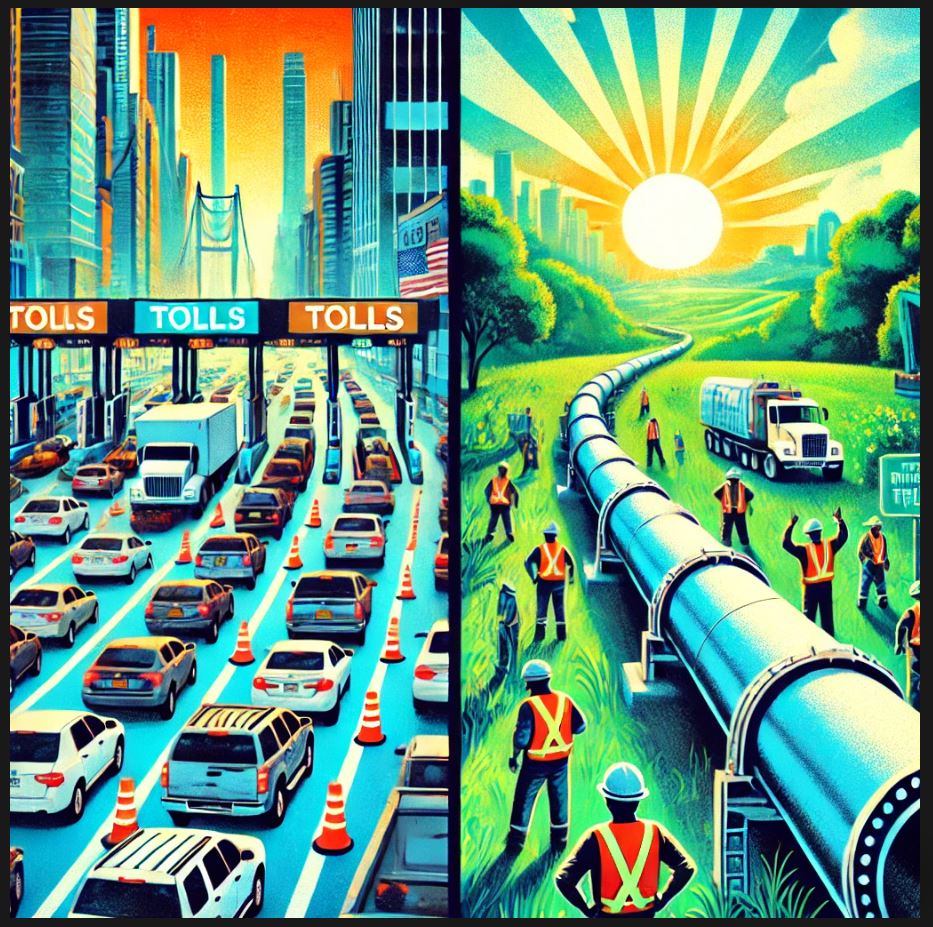
A Path to Economic Stability and Energy Security for New York
New York City and the state as a whole are facing serious financial challenges due to the costs of maintaining its sanctuary city status and ongoing legal disputes over funding. At the same time, economic and energy concerns—such as high utility costs and congestion pricing—are pressing issues for residents. The meeting between President Donald Trump and Governor Kathy Hochul presents an opportunity to forge a more sustainable path forward that prioritizes fiscal responsibility, energy independence, and economic relief for New Yorkers.
1. Addressing the Fiscal Burden of Sanctuary Policies
New York City has spent billions on migrant services, leading to strained budgets and legal battles over federal funding. Instead of relying on taxpayer dollars to sustain these expenses, leaders should reconsider policies that are unsustainable in the long term. By shifting focus to economic growth rather than dependency-driven programs, the city and state can ease financial pressures on residents.
2. Energy Independence Through the Constitution Pipeline
President Trump’s renewed push for the Constitution natural gas pipeline offers a major opportunity for economic relief. The pipeline, which would transport natural gas from Pennsylvania to New York and New England, could lower energy costs for households by up to $5,000 per year. Additionally, pipeline development would create jobs, increase state revenue, and reduce reliance on foreign energy sources.
However, for the project to move forward, New York leadership must offer clear support. Without the backing of Governor Hochul and other regional leaders, pipeline developers are unlikely to proceed. If New York prioritizes domestic energy security over restrictive environmental policies that have historically blocked infrastructure projects, the state can become a leader in affordable and reliable energy.
3. Eliminating Costly Congestion Pricing
New York’s congestion pricing plan—a $9 toll for vehicles entering Manhattan’s busiest areas—was expected to generate $15 billion in revenue. However, the Trump administration revoked federal approval, citing concerns about its disproportionate financial impact on working-class Americans. Instead of taxing residents further, New York should explore alternative revenue streams, such as energy infrastructure investments, to fund public projects.
4. A Strategic Plan for Economic Growth
For New York to achieve financial stability and long-term prosperity, leadership must pivot toward sustainable economic solutions rather than policies that increase costs for residents. A practical approach includes:
- Redirecting funds from unsustainable sanctuary policies toward economic development programs and essential services.
- Supporting the Constitution Pipeline to lower energy costs and generate new revenue.
- Eliminating congestion pricing to ease financial burdens on commuters and small businesses.
- Encouraging private-sector investment in infrastructure to create jobs and strengthen the local economy.
Conclusion: A Vision for a Stronger New York
If Governor Hochul and President Trump can align on these key issues, New York could transition from financial strain to economic stability. By prioritizing energy independence, reducing government-imposed costs, and refocusing spending on initiatives that benefit all residents, the state can create a future of lower costs, job growth, and long-term prosperity. This moment presents a rare opportunity for bipartisan collaboration—one that should not be wasted.



 The Metaphorical
Leave a Reply