
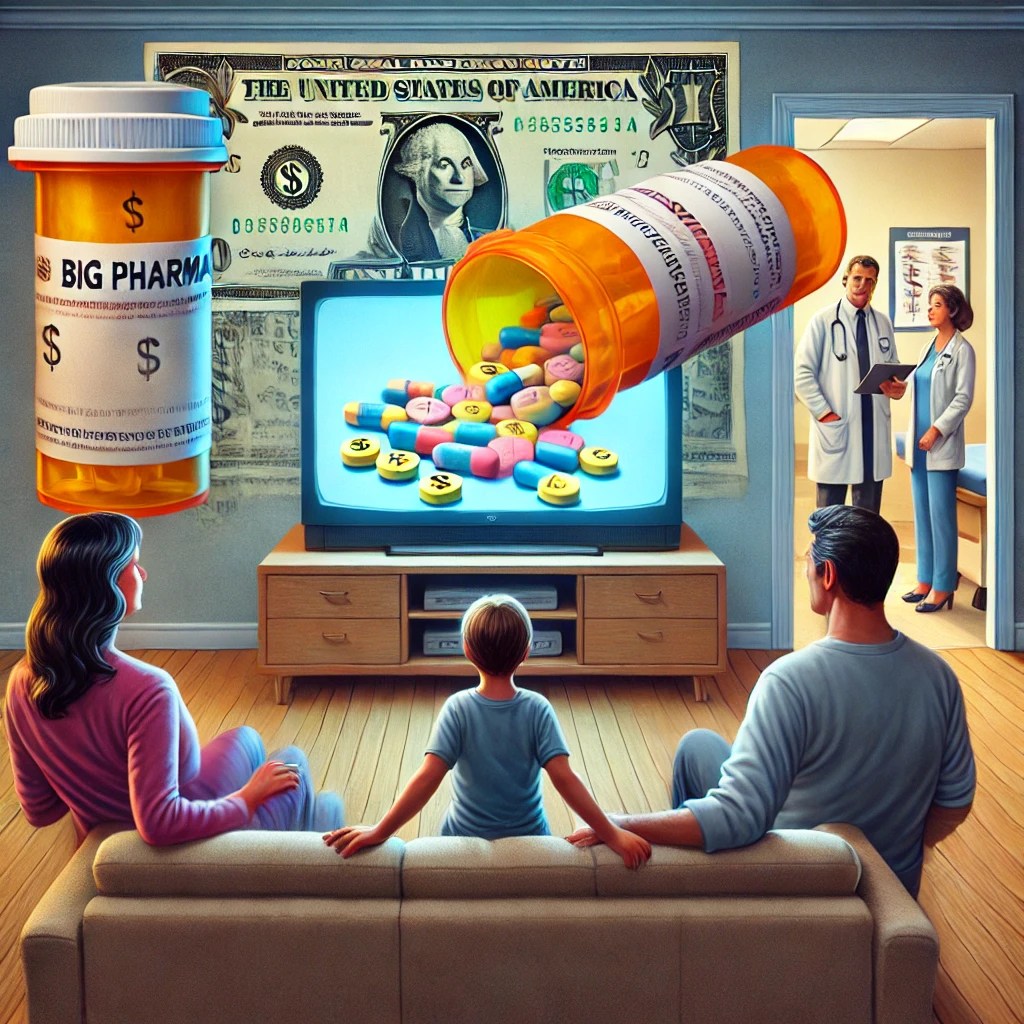
If We Banned Cigarette Ads, Why Does Big Pharma Get a Free Pass?
Every time you turn on the TV, you’re bombarded with drug commercials pushing pills instead of real health solutions. They tell you to “ask your doctor” while rattling off side effects—some of which are worse than the condition itself, sometimes even including death.
The truth? These ads aren’t about keeping you informed. They’re about making billions in profit while keeping you dependent on medications instead of addressing root causes. The U.S. and New Zealand are the only countries that allow direct-to-consumer (DTC) pharmaceutical advertising. Every other nation puts public health before corporate greed.
The Problem: Pharma Ads Prioritize Profits Over Health
Pharmaceutical ads don’t exist to educate—they exist to sell. They manipulate emotions, push expensive treatments over lifestyle changes, and create a culture where medication is the first resort rather than the last. They downplay risks while inflating benefits, often using happy, carefree imagery to overshadow a laundry list of side effects.
The argument that these ads provide “essential information” doesn’t hold up. True medical guidance comes from doctors, not marketing campaigns designed to boost shareholder profits. If Big Pharma cared about education over profit, they wouldn’t fight so hard to keep these ads in prime-time slots.
The Media’s Role: Profiting from the Pharma Pipeline
It’s not just Big Pharma that benefits—TV networks and digital platforms make billions from pharmaceutical advertising. In 2023 alone, drug companies spent over $8 billion on ads in the U.S. That money doesn’t just pay for commercials—it influences the media landscape.
When networks rely on Big Pharma’s ad dollars, it creates a conflict of interest. Are they going to risk losing their biggest advertisers by airing investigative reports on overprescription, opioid addiction, or the dangers of certain drugs? Unlikely. The financial grip of the pharmaceutical industry on mainstream media makes unbiased reporting on healthcare nearly impossible.
We Banned Cigarette Ads for Public Health—Why Not Pharma Ads?
The U.S. banned cigarette ads in 1971 because they were bad for public health. The same logic applies to pharmaceutical ads. These commercials encourage unnecessary prescriptions, normalize lifelong medication dependence, and contribute to skyrocketing healthcare costs.
Think about it: If a company were truly invested in health, wouldn’t it focus on prevention and root causes instead of symptom management? Instead, pharma ads have conditioned people to believe there’s a pill for everything—while conveniently ignoring solutions like nutrition, exercise, and holistic treatments.
A Compromise: Keep Pharma Ads Where They Belong—In Doctor’s Offices
If banning these ads completely is a stretch, let’s at least take them off TV and social media. Instead of letting Big Pharma sell directly to consumers, we should limit advertising to doctor’s offices, where medical professionals can provide immediate context. This ensures patients receive balanced, informed advice rather than being influenced by marketing tactics.
Conclusion: It’s Time to Rethink Pharma Advertising
We’ve done it before. We banned cigarette ads because they were harmful. It’s time to apply that same principle to pharmaceutical advertising. No more drug commercials during football games, cartoons, or family TV time. No more emotional manipulation convincing people that medication is always the answer.
Most importantly, we need to break the financial ties between Big Pharma and the media. When billions in ad revenue are on the line, truth takes a backseat to profit. Public health should come before corporate interests, and if we’re serious about addressing the root causes of disease, reining in Big Pharma’s marketing machine is a crucial first step.




 The Metaphorical
Leave a Reply