
The Metaphorical — Spring 2026
When the Frogs Speak
Winter does not surrender in a single moment. It withdraws gradually, almost reluctantly, as though the earth itself must be persuaded to breathe again. Snow recedes into the shaded corners of the woods, the frozen ground loosens beneath a low drifting fog, and the air begins to carry that deep and unmistakable scent of soil remembering life. It is a quiet transition, one that cannot be read on a calendar, but only in the small awakenings of the land itself.
Then comes the rain, patient and steady. It seeps into the waiting ground and gathers in the shallow places where water briefly returns each year. The forest absorbs it, the wetlands swell, and the cold stillness of winter begins to soften beneath the surface.
It is often a bird that speaks first.
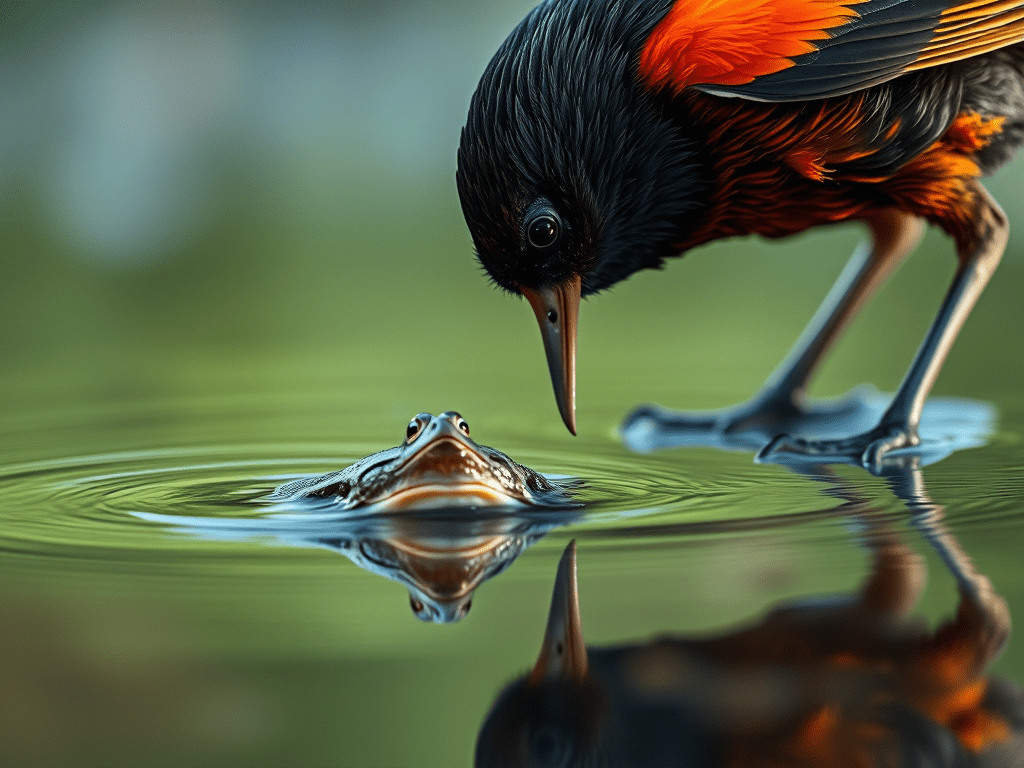
Across the marsh a red-winged blackbird appears, its voice cutting through the damp air with that unmistakable call carried north on the warming winds. For generations that sound has marked the turning of the season in the wetlands. The marsh receives the message, and the living things bound to that water respond.
Soon after, another voice rises.
If one stands quietly beside the dark edge of a woodland pond, the water begins to murmur with an unusual chorus, as though a gathering of small ducks had assembled somewhere among the trees. These are the wood frogs, emerging from beneath the forest floor where they have passed the winter in frozen silence. Drawn by rain and thaw, they move toward the temporary ponds that appear only briefly each year, and for a handful of nights the woods fill with their strange, conversational calls.
In that short gathering the work of spring begins.
By morning the water holds clusters of eggs floating near the surface like small constellations suspended in clear jelly. Within them the quiet machinery of the season has already begun its patient work. In time those eggs will become tadpoles, and by the end of summer they will return to the forest as frogs once more.
The sequence is not accidental. The warming air, the rain, the returning bird, the awakening frogs—each belongs to the same turning of the land. For those who live close enough to notice, the signals arrive in an order that has repeated itself across generations.
There was a time when people read these signs as easily as words on a page. The call of the blackbird over the marsh, the sudden voices rising from the pond, the scent of wet earth returning after winter—these were not curiosities, but instructions written plainly into the living world.
When the frogs speak, the soil is ready.
And when the soil is ready, the hands of the gardener follow.
So the frogs rise from the ground to make room for the harvest yet to come. The pond fills with eggs, the garden fills with seed, and somewhere between those two quiet acts the season gathers its strength. The spring swells, life begins to move again through root and water alike, and the steady work of abundance—of presence, of awareness—continues upon the land once more.


 The Metaphorical
Leave a Reply