
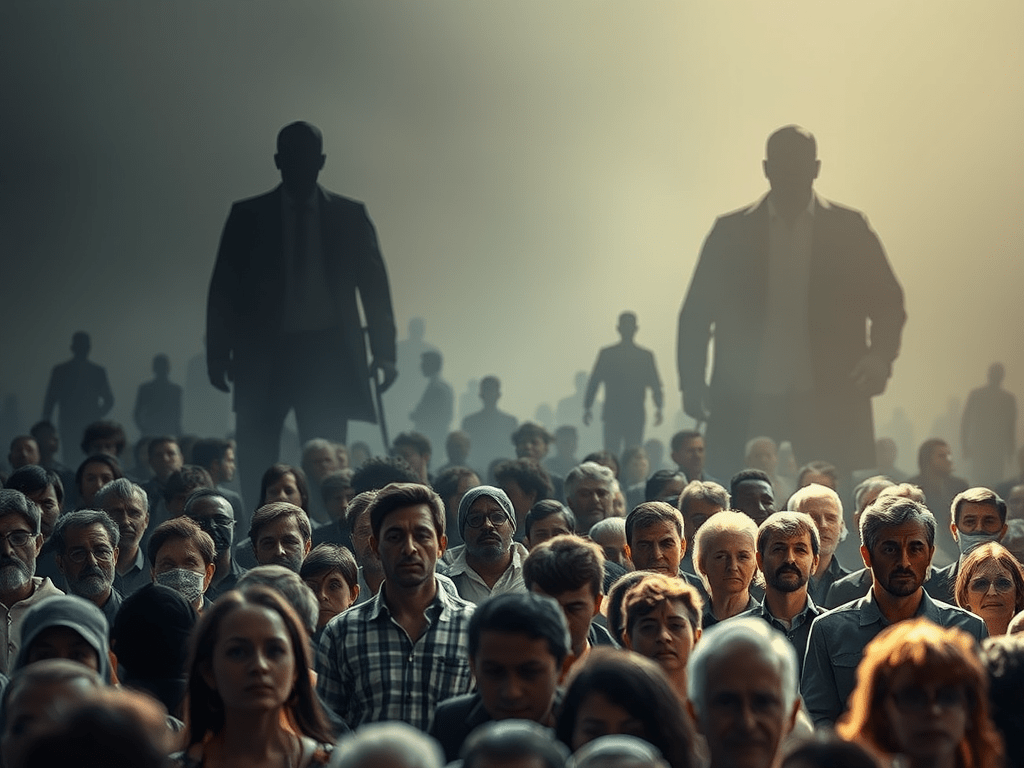
Part 2: Who Really Holds the Power?
Power is often portrayed as something distant—reserved for governments, corporations, and elite decision-makers. We are led to believe that we are mere spectators, that the world moves according to forces beyond our control.
This is the greatest deception of all.
The Power Structure We Are Told Exists
We are taught to see power in a hierarchy:
- Governments create laws and dictate policies.
- Corporations control economies and innovation.
- Media informs and shapes public perception.
- Institutions (banks, universities, think tanks) decide what is possible.
At a glance, it appears logical. These are the entities that hold the wealth, control the information, and determine the rules.
But there is a fatal flaw in this model: None of it functions without the people.
The Power Structure That Actually Exists
Strip away the illusion, and the reality is simple:
- Governments do not exist without taxpayers.
- Corporations do not exist without consumers.
- Media does not exist without an audience.
- Institutions do not exist without participation.
The entire structure rests on consent—the collective agreement, whether conscious or not, to play by the rules that have been set. If the people withdraw their participation, the system collapses.
The Hidden Hand: Who Actually Pulls the Strings?
If power depends on the people, why does it feel so inaccessible? Because a select few have mastered the art of influence, shaping the narrative so that the masses act against their own interests without realizing it.
- Governments pass laws written by lobbyists working for private interests.
- Corporations manipulate consumer behavior through advertising, data collection, and debt cycles.
- Media controls perception by deciding what is and isn’t news, framing reality to serve an agenda.
- Educational institutions condition obedience rather than encourage independent thought.
This is not a conspiracy. It is a structure of control by persuasion. The system is not maintained by force—it is maintained by belief.
The Moment of Realization
What happens when people recognize their own power?
- Governments are held accountable.
- Corporations must serve, not exploit.
- Media loses control of the narrative.
- Education fosters thinkers, not followers.
This is not theory; it is historical fact. Every great shift—civil rights movements, labor reforms, the rise and fall of empires—happened because the people stopped complying with their own oppression.
The question is not whether power belongs to the people. It always has.
The real question is: What will the people do with it?
Previous: The Great Awakening



Leave a Reply